
Play Games on Nvidia GeForce RTX 4080 with a Cheap Linux Laptop
I am not a competitive gamer or similar. I would like to play games for fun, and I don’t want to invest a little fortune now and in the…
I am not a competitive gamer or similar. I would like to play games for fun, and I don’t want to invest a little fortune now and in the future to upgrade
When I was a kid, I was raised with Atari, then Commodore 64 and lastly, before PC dominated the gaming industry, another legend was the Amiga 500 Plus. It was a great time because it was not just games we played. We discovered the new possibilities in each game we had never seen before. Nowadays, having great graphics is not an exciting point for any game, but at that time, when we saw the improvements in the graphics, it was golden. Don’t get me wrong, I am not retro person and love retro gaming. I haven’t used any emulator to play old games; honestly, I don’t even know how to set up and install old games. Once I was enthusiastic to build a RetroPie (https://retropie.org.uk/) but then I used my Raspi to make my weather station.
Nowadays, movies and games have a skinny line. Each game is like a movie, and vice versa. As a result, hardware requirements, equipment, and the time you spend have increased heavily. It is not only for PC gaming; it is also the same for console gaming. Yes, you are not improving the hardware, but you are paying a lot for game subscriptions and additional purchases. The gaming industry has become an electricity bill you must pay monthly.
We cannot escape game subscriptions, but we can escape hardware improvements and, somehow, game item purchases. I am not focussing on solving the problem as a whole because it is not possible. It is not like my childhood anytime, and we need to accept the situation. On the other hand, I would like to find some way to have continuous hardware improvements.
It is always a kind of discussion of me internally during black Friday sales… Should I buy an Alienware laptop? Should I go with the cheaper one? Alienware has a 40% discount, so I should not miss this. At the end, I calculate several numbers. For example, if I play 8 hours a month, how much money do I pay for each session (1 hour)? After a year, I need to lower the settings for new games; two years more and three years may be out of the picture, so I need to try to sell or convert it to a Linux server for what? After all these calculations, I constantly decide not to invest money, but I have done these calculations every year.
I have not used a Windows PC for a long while. I gradually reduced my usage from 2000 to 2006, and I have not used a personal Windows PC since. I was in the Apple and Linux worlds.
I Changed My Go-to Linux Distro for the First Time from Year 2006
When I want to play a game, I generally use the console. On the other hand, I am not so good with their controllers, specifically FPS games, which I like playing. I know, I know, as my friends also tell me, “I am going to get used to it after a while”. Yes, it is definite for every skill, but I am very pragmatic to improve myself, especially if I have an alternative. I have a family, and I like skilling up my little son more than skilling up myself for a controller, while I am perfectly fine with a mouse and keyboard. So, I sacrificed FPS games in consoles.
It was very difficult to play PC games in Linux, which was basically not so usable (Wine). Apple was basically useless, but nowadays, there are some alignments for better gaming, but Apple has never been a gaming computer. Steam invests a lot of time and money in Proton (https://github.com/ValveSoftware/Proton), but in this case, I should also have a graphics card and deal with problematic Linux drivers. No, it is not for me.
I hesitated to try “Web streaming” gaming, especially after Google out for Stadia (https://stadia.google.com/gg/). I could still play some of my favourite games on Apple with Steam, like Civilization, but my MacBook Pro is older (2019 16”), making me feel about it. When calculating the value proposition of a new MacBook Pro, I decided not to go with it.
Good Bye My 20 Years Old Friend: Apple
I still have my old MacBook Pro, but as I wrote in the article, my primary system for everything is a Lenovo ThinkPad. I now have a Linux machine and want to play some games.
The first obvious choice was installing Steam and playing Proton-compatible games. I tried, but I didn’t enjoy it. Most probably, it is because of my integrated GPU rather than an external one.
I decided to try GeForce Now ultimate membership. I do the regular calculation. As I am in the EU, it will cost me 21.99 euros per month if I don’t go with a six-month subscription. It can be reduced to 18.17 euros per month. If I play 8 hours a month, each session (1 hour) will be 2.74 euros. Not bad at all; primarily, I am not investing any money in hardware, but I will have GeForce RTX 4080; each session is 8 hours (I am playing 1 hour in each session), 4K streaming, 240 FPS, and no waiting time. I need Chrome, Edge or Safari to play. This is an excellent deal for me!
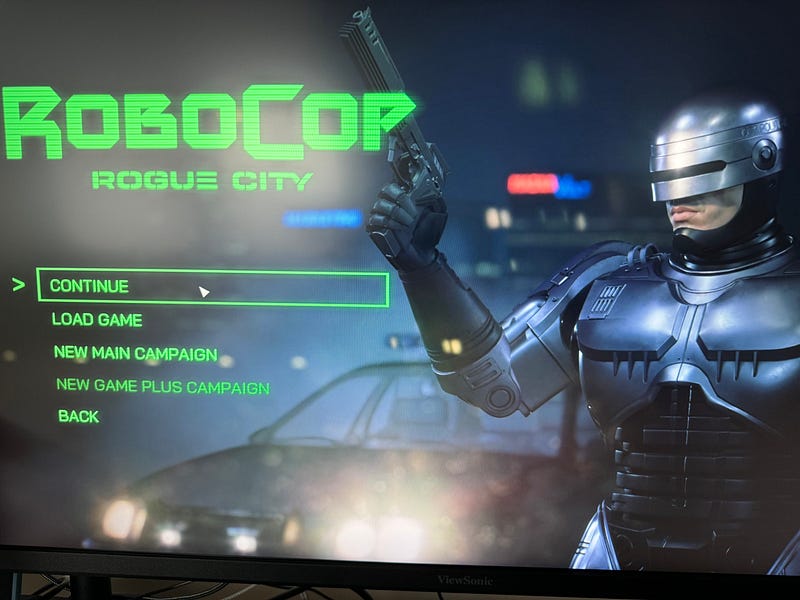
I purchased the Ultimate subscription and installed Chrome on my Fedora Linux (yes, I don’t usually have Chrome). I was very sceptical, but it turned out to be a great experience.
I will explore only a few details; this post is not about reviewing the service. I would like to reflect on my experience based on my expectations.
I connected my Steam account, and it was super easy. There are four different connections; you can also connect them. I don’t have other services, so Steam is OK with me. The most common misunderstanding is that you will have all the games GeForce Now provides with your subscription. It is not. You must still purchase the games from the respective service (Steam, etc.). When you launch the game, GeForce Now creates a particular type of virtual machine called Ring, and you see the Steam application with your account, and the game starts, so there is no download time. You can use all the Steam functionalities, like chat, as usual.

Another misunderstanding is that you can play all your games with the subscription. It is not. There are 2000+ games spread over several services, and you can only play the games available in the GeForce Now service. This can be a show-stopper for most serious game players. Although there are some recent titles in the list, the majority of the time, the games are not so up-to-date because of the technology capability. The GeForce Now service needs the games to be compatible with their platform technology.
The last and another misunderstanding is that GeForce Now is the ultimate solution, and you don’t need additional requirements. It is not. Especially if you would like to go with the ultimate model, your internet matters. I suggest you play only with a fast and reliable internet connection. For example, when I was first testing the system, there was a test about connection, compatibility, etc. It didn’t like the connection’s reliability or speed while on WiFi. When I connected to it via Ethernet cable, it gave me a passing score.
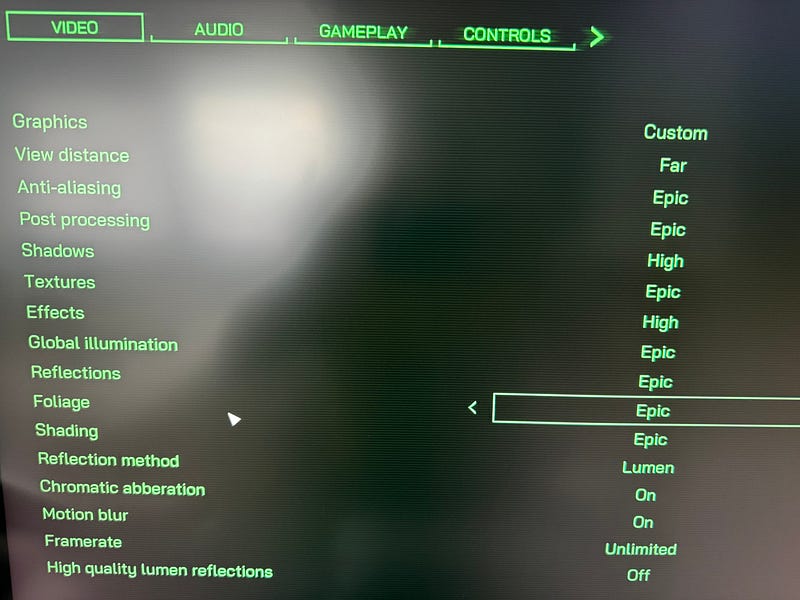
Am I happy with my decision? Definitely! I am not searching for the latest games. I am not searching for competitive gaming. There are enough games for me to play, and this system will be improved in the future. I play the games in the highest settings with my 649-euro Linux laptop. Nvidia RTX 4080 starts from $1200, and two or two years later, there will be 4090 or something different that I need to purchase. If I put every component into the machine, such a gaming laptop can go over $4000 quickly. If I go with the 6-month subscription model with GeForce Now, I need to pay 218 euros every year for the latest hardware.