
New Era: Even When We Pay, We're Still Products
"If You're Not Paying For It, You Become The Product" — That's changing now
New Era: Even When We Pay, We're Still Products
"If You're Not Paying For It, You Become The Product" — That's changing now
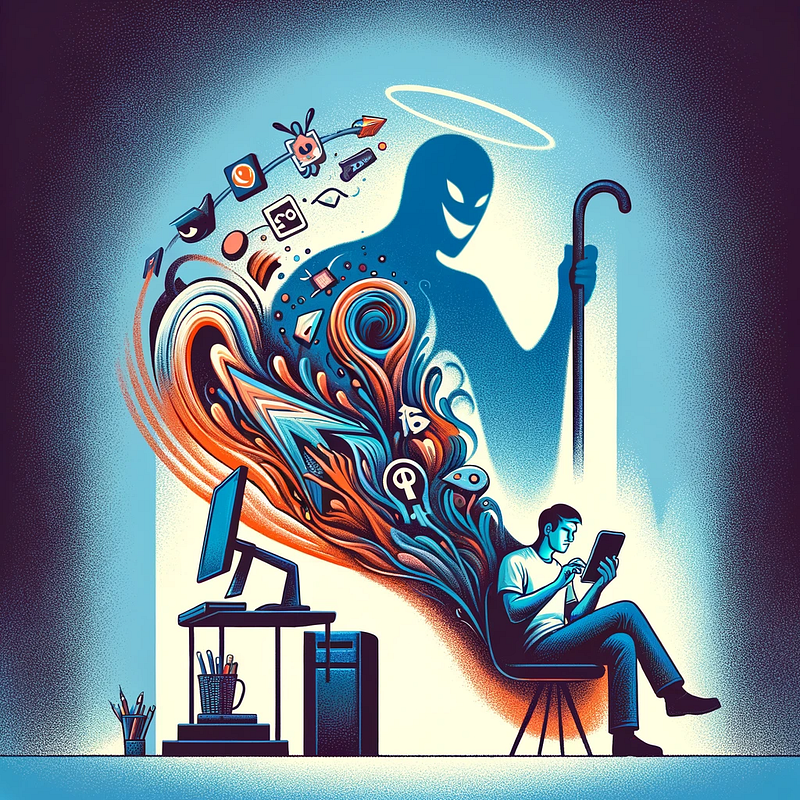
Have you ever heard the saying, "If You're Not Paying For It, You Become The Product"? Well, things are changing. Nowadays, even when we pay for online services, our personal information is still being used by companies. This happens because of Generative AI and Large Language Models (LLMs).
Let me break it down. Generative AI and LLMs are intelligent computer programs that learn from the information we give them. When we use the internet, we leave information about what we like, do, and are interested in. These AI programs take this information, learn from it, and get better at what they do. Sounds cool. But here's the catch — our data is being used for this, and we might not even know it.
This situation raises some big questions about what's right and wrong. Can companies use our information like this, even if we pay them? What about our privacy? These questions are important because they affect our future. Some people are worried that we're heading towards a future where our confidentiality no longer exists and our personal information is just something companies use.
So, what does this mean for us? We need to start talking about how companies use our data and ensure there are rules to protect our privacy. This isn't just about stopping a scary future; it's about ensuring that as technology improves, it respects us and keeps our information safe.
It does not end here… They can crawl the web with our data included, but we can also give the information intentionally. For example, if you are using ChatGPT, you already give your information even though you paid for the service. If you are curious about how they are using the data, they described here:
When you use our services for individuals such as ChatGPT or DALL•E, we may use your content to train our models.
You can opt-out, but then you will lose the history of the content, so if you would like to revisit something you had, you cannot. When they provide an opt-out feature, they cut another feature.
The same thing happened with Instagram recently. Users in the EU can pay 9.99 euros per month to opt out of their data being used by the ad service, but how can we be sure that they are not tracking?
Amazon — $877M (2021): In July 2021, European authorities in Luxembourg imposed a massive fine of $877 million on Amazon Europe for data breaches and not adhering to the fundamental principles of data processing as outlined in the GDPR. Additionally, Amazon was instructed to undertake unspecified changes to its practices.
Equifax — $625M (2019): In the UK for breaching the Data Protection Act of 1998, the precursor to the country's GDPR legislation.
Instagram — $403m (2022): In September, Ireland's Data Protection Commissioner imposed a $403 million fine on Instagram for breaching the children's privacy safeguards specified in the GDPR. The issue at the heart of this fine was a persistent problem on the platform, where underage users' phone numbers and email addresses became publicly visible when they switched to business or creator accounts, potentially to access analytics features like profile views and post engagement.
If you would like to see more for the fines, here is the list for 2023 only. If you want to see a full list, here is the link.
You can see two specific patterns with these fines:
99% of the time, the big companies are fined
The EU is very strict about GDPR, but the rest of the world is not.
Many startups are popping up in the AI era, which needs big data sets to be trained and produce results. How many startups did you see in the fine list?
Let me close the article with recent excitement: the Samsung S24 series. It is packed with impressive AI features, but there is a glitch:
Galaxy AI features will be provided for free until the end of 2025 on supported Samsung Galaxy devices. Different terms may apply for AI features provided by third parties.
I don't know about the pricing in your country, but the Samsung S24 Ultimate costs around 1500 euros in Germany. You are paying a good amount of money to be a lab testimonial, and they will collect your data until the end of 2025. Then Samsung will charge you for the features you helped them improve by purchasing their impressive mobile phones. This is general Samsung practice. I bought a smart TV from Samsung in 2019, and whatever I do from settings to be opted out, I still see ads in the smart TV menu. I paid for the TV, it is not free.
Ultimately, we need to remember that even though technology is impressive and can do a lot of good, we shouldn't let it use our personal information without our permission. It's about finding a balance — enjoying the cool stuff technology can do for us while keeping our personal information private and respected.