
Linux Phones Keep Trying: The Void Phone VX1 Targets Enterprise
FuriLabs launches Void Phone VX1 for enterprise. Mid-range specs, privacy focus, and a strategic rebrand that might finally find Linux…
FuriLabs launches Void Phone VX1 for enterprise. Mid-range specs, privacy focus, and a strategic rebrand that might finally find Linux phones a paying audience.
Enterprise customers. Privacy demands. FuriLabs just announced the Void Phone VX1, a Linux smartphone targeting businesses who need something Android and iOS cannot offer. After watching Linux phones struggle for years, this strategic pivot deserves attention.
The Announcement
FuriLabs. New sub-brand. The Void Phone VX1 launched this month under their enterprise-focused umbrella, essentially a rebadged FLX1s with a fresh identity aimed at corporate buyers.
The specs tell a familiar mid-range story. MediaTek Dimensity 900 chipset. 8GB RAM. 128GB storage. These numbers place it squarely in the mid-tier Android territory, not competing with flagships, but competent enough for most business applications.
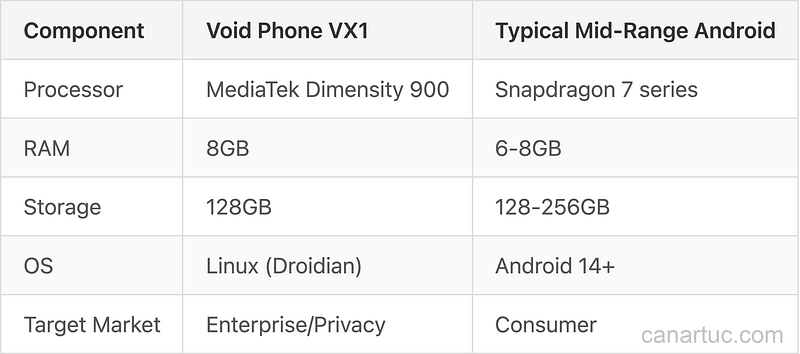
What makes this interesting is not the hardware. It is the strategy.
If this approach resonates with you, a clap helps other Linux practitioners find it.
I am a human writer who gets motivated to write more with your support! You don’t need to pay. I just need your clap 👏 if you like my story and comment ✍️ if you want to say something. You can follow me on Medium, LinkedIn, Instagram and X.
Why Enterprise Makes Sense
Linux phones have failed consumers for a decade. The software ecosystem cannot match Android or iOS. App availability is limited. Camera software lags behind. Every enthusiast review ends with the same conclusion: not ready for daily driving.
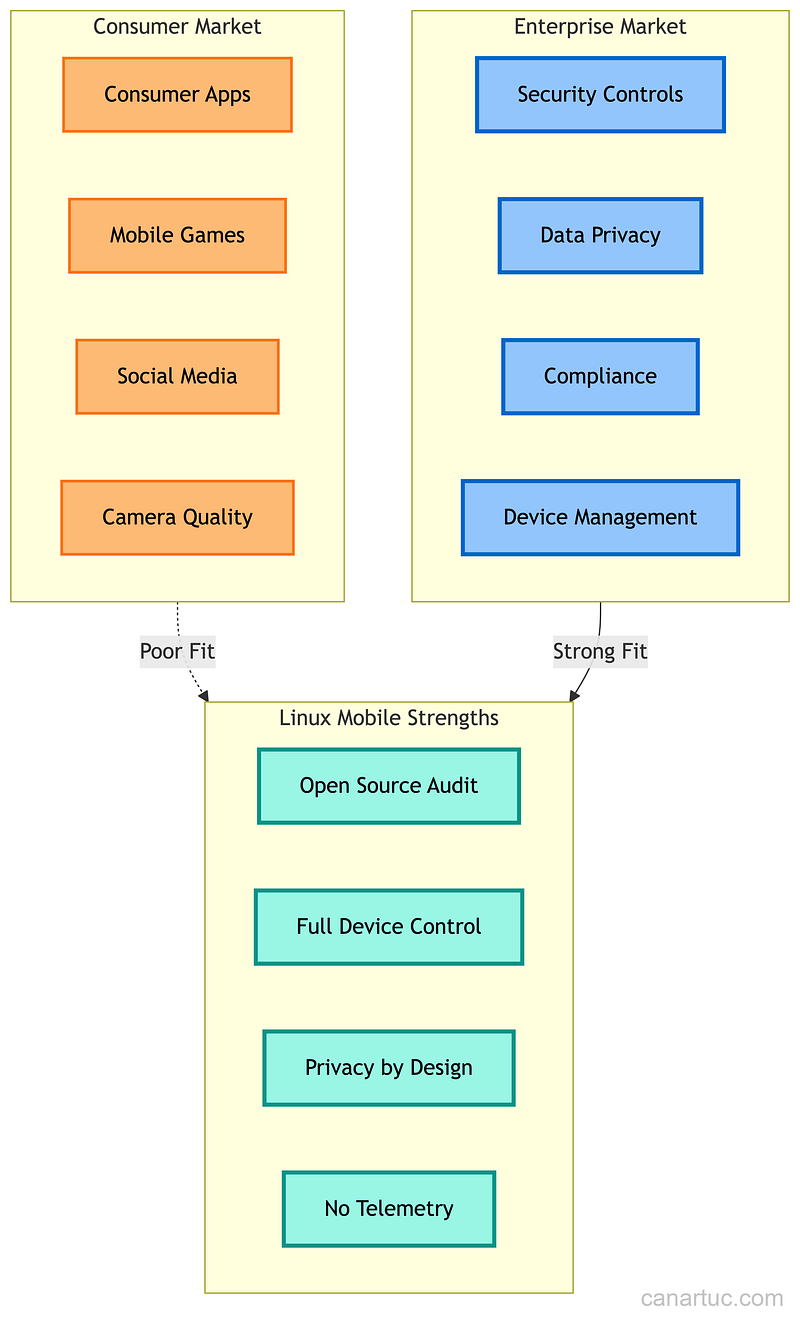
Enterprise buyers have different priorities. Security. Control. Compliance. The ability to audit every line of code running on company devices.
Android Enterprise offers management, but Google still sees everything. iOS provides security, but Apple controls the stack. For organizations handling sensitive data, those trade-offs matter.
Healthcare organizations are processing patient information. Law firms protecting client communications. Government agencies with classification requirements. Financial services under regulatory scrutiny.
These buyers do not need Instagram. They need verified, auditable software.
The Rebadging Strategy
FuriLabs is not hiding the rebrand. The Void Phone VX1 shares its DNA with the FLX1s, their existing Linux smartphone. Different brand, same hardware, new market positioning.
This is clever.
Creating a dedicated enterprise brand separates consumer expectations from business requirements. When a business evaluates the Void Phone, they are not comparing it to a Galaxy S24. They are comparing it to specialized secure phones that cost far more.
The strategy also opens OEM partnerships. Enterprises often want their own branding on devices. Having a flexible sub-brand makes white-labeling straightforward without diluting the FuriLabs identity.

What Linux Phones Actually Offer
The honest assessment is nuanced.
What works: Full device ownership. No forced telemetry. Convergence (using your phone as a desktop when docked). SSH access. Package management. Running actual Linux applications. The ability to inspect and modify any system component.
What struggles: App ecosystem remains thin. Banking apps rarely work. Camera software needs improvement. Battery optimization trails Android. Video call quality varies.
For a consumer replacing their daily driver, these gaps hurt. For an enterprise deploying purpose-built devices, many gaps become irrelevant.
A secure phone for classified communications does not need TikTok. A healthcare device for patient records does not need gaming performance. A field device for infrastructure inspection needs reliability and auditability, not App Store access.
The Broader Linux Mobile Ecosystem
Void Phone joins an ecosystem that finally has momentum.
Pine64 continues developing mobile Linux devices, though PinePhone Pro was discontinued in August 2025. Purism ships the Librem 5, despite its challenges. postmarketOS supports dozens of devices. Multiple distributions (Droidian, Mobian, Phosh-based systems) have reached usable states.

The Dimensity 900 in the VX1 is notable. Previous Linux phones often used older or specialized chips. Using a mainstream MediaTek SoC improves driver availability and long-term support prospects.
Realistic Expectations
Will the Void Phone VX1 capture significant enterprise market share? Probably not immediately.
Enterprise sales cycles are long. Compliance certifications take time. IT departments are conservative for good reasons. Convincing a security team to approve a new device platform requires extensive validation.
But this is how markets develop. Someone has to make the first serious attempt. FuriLabs is betting that privacy regulations are tightening, that enterprise buyers are increasingly skeptical of big tech platforms, and that a legitimate alternative can find its niche.
The timing has logic. GDPR enforcement continues to strengthen. China concerns affect device procurement. Data sovereignty becomes a boardroom topic. The conditions for privacy-focused alternatives are better than ever.
Should You Care?
If you are evaluating secure mobile options for your organization, the Void Phone VX1 deserves a look. Not as a complete solution today, but as an indicator of where alternatives are heading.
If you are a Linux enthusiast hoping this means mainstream consumer success, temper expectations. Enterprise focus is explicitly moving away from consumer competition.
If you are a mobile developer, the expanding Linux mobile ecosystem offers interesting opportunities. Applications that serve enterprise use cases (secure messaging, document handling, device management) could find paying customers.
The Bottom Line
Linux phones keep trying. The Void Phone VX1 represents a strategic evolution: stop competing with Android and iOS on consumer terms, and find markets where Linux strengths (auditability, control, privacy) actually matter.
It might work. Enterprise buyers have budget. They have genuine security requirements that mainstream platforms cannot fully address. They accept trade-offs that consumers reject.
After watching enthusiast projects struggle against impossible odds, targeting customers who might actually pay for what Linux offers feels refreshingly practical.
The mobile Linux future might not be in your pocket replacing your iPhone. It might be in an enterprise dock running secure applications for organizations that need more control than Google and Apple will ever provide.
That is a smaller market. But it is a market where Linux phones can win.
Have you evaluated alternative mobile platforms for enterprise use? What would it take for your organization to consider Linux phones? Share your perspective in the comments.
I am a human writer who gets motivated to write more with your support! You don’t need to pay. I just need your clap 👏 if you like my story and comment ✍️ if you want to say something. You can follow me on Medium, LinkedIn, Instagram and X.