Linux Audio Stack: How PipeWire Fixed 20 Years of Chaos
Linux audio broke for 20 years. PipeWire unified ALSA, PulseAudio, and JACK into one framework. Major distros shipped it by 2023. The fix…


Linux audio broke for 20 years. PipeWire unified ALSA, PulseAudio, and JACK into one framework. Major distros shipped it by 2023. The fix finally works.
Twenty years. Two decades. That’s how long Linux users endured audio that randomly broke.
Your video call drops audio mid-sentence. Bluetooth headphones connect but produce silence. Games work until you alt-tab, then nothing. Every Linux desktop user has lived some version of this nightmare.
I’ve been running Linux since the early 2000s. I’ve debugged audio on workstations, home servers, and laptops across dozens of distributions. The pattern was always the same: audio works perfectly until it doesn’t. No error message. No warning. Just silence.
After 20+ years in systems architecture, I finally understand why Linux audio was fundamentally broken and why PipeWire actually fixes it.
The answer isn’t better code. It’s a better architecture.
If this sounds familiar, you’re not alone. Keep reading.
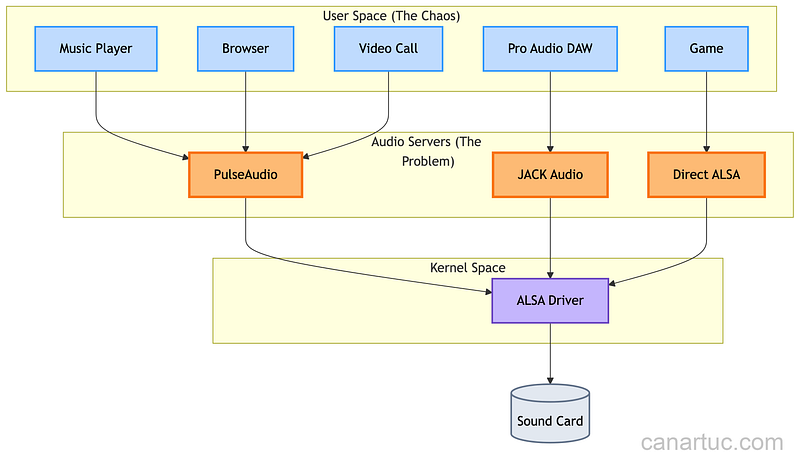
The Crime Scene: Why Linux Audio Broke
To understand PipeWire, you need to understand the mess it inherited.