
Fedora Promotes KDE to Equal Status: The End of GNOME Supremacy
Let me tell you, I always had this weird relationship with Fedora’s desktop environment situation. The project clearly loved GNOME.
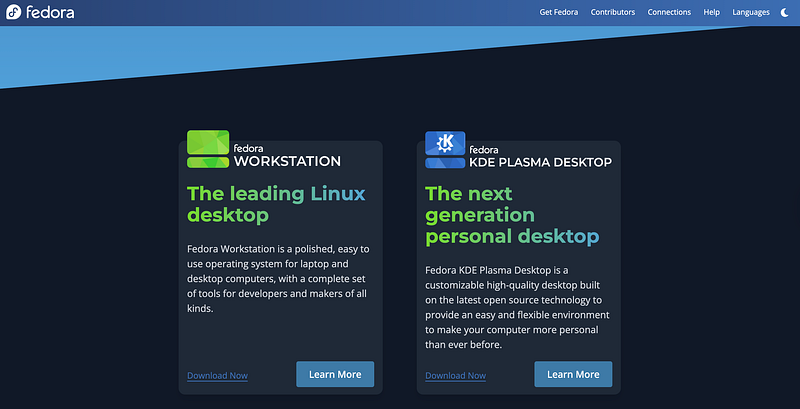
I’ve been using Fedora on and off for over five years now. When I finally made the switch from macOS to Linux after 20 years of Mac loyalty, Fedora was one of the distributions I tested extensively. And let me tell you, I always had this weird relationship with Fedora’s desktop environment situation. The project clearly loved GNOME (like, REALLY loved GNOME) to the point where KDE felt like a stepchild nobody wanted to talk about at family gatherings.
But on April 15, 2025, something historic happened. Fedora 42 was released with a change that signals a fundamental shift in how the project views desktop environments. KDE Plasma was promoted from a “spin” to a full “Edition” with equal status to GNOME. This wasn’t some minor technical adjustment or rebrand. It’s a complete philosophical shift that reveals a great deal about where desktop Linux is headed.
And honestly? It’s about damn time.
What Actually Changed (And What Didn’t)
Let me be clear about what this promotion means and what it doesn’t mean, as I’ve already seen people misinterpreting it online.
What changed:
Marketing and positioning: KDE Plasma Desktop Edition now appears right alongside Fedora Workstation Edition (the GNOME version) on the official website
Visibility and respect: KDE gets a dedicated flagship webpage showcasing its features and capabilities
Equal promotional treatment: No more “oh, and we also have this KDE thing if you’re into that” attitude
Official recognition: The Fedora project unanimously accepted that KDE deserves the same status as GNOME
What didn’t change:
Development priority: KDE Plasma was already a release-blocking desktop environment before this promotion
Resource allocation: The KDE spin was already getting serious development attention
Technical quality: KDE didn’t suddenly become better — it was already excellent
This primarily concerns presentation, messaging, and philosophical positioning. However, don’t underestimate the importance of that. The message you send about what’s “primary” and what’s “alternative” shapes user perception, developer interest, and long-term ecosystem health.
Why This Matters More Than You Think
I know some of you are reading this and thinking, “So what? It’s just marketing.” But here’s the thing — after 20+ years in tech, I’ve learned that how you position something is almost as important as what that something actually is.
When Fedora positioned GNOME as the “Workstation Edition” and KDE as just a “spin,” they were telling the world: “GNOME is our flagship. KDE is for people with special needs.” That messaging had real consequences:
For users: New Linux users would come to Fedora’s website, see GNOME as the default, and assume it was the “best” option. Many never even knew there was a KDE version, or if they did, they figured it was inferior.
For developers: Why would you invest time in developing features for the “alternative” version when the flagship gets all the attention?
For the community, it created a weird hierarchy where GNOME users felt like first-class citizens and KDE users felt like they were using the “wrong” version of Fedora.
The KDE Plasma 6 Factor
Now, let’s talk about why this happened NOW. This promotion didn’t come out of nowhere. It coincides with the maturity and excellence of KDE Plasma 6.
I’ve tested both GNOME and KDE extensively over the years, and honestly, KDE Plasma 6 is a technical achievement that deserves recognition:
Wayland support: KDE Plasma 6 brought massive Wayland improvements. And I’m not talking about “it kind of works” improvements. I’m talking about production-ready, daily-driver-worthy Wayland support.
Performance: KDE Plasma 6 is FAST. Like, noticeably faster than previous versions. They’ve done serious optimization work.
Features without bloat: Here’s something that surprises people. KDE has more features than GNOME, but it doesn’t feel bloated. You get customization options that GNOME users can only dream about, but you’re not forced to use them.
Modern design: KDE Plasma 6 looks genuinely modern. No more dated UI elements or inconsistent theming.
The Fedora project saw what the rest of us saw: KDE Plasma 6 is not just “good enough”; it’s excellent. It rivals or surpasses GNOME in many technical areas. Keeping it as a second-class citizen was becoming increasingly indefensible.
What This Says About Desktop Environment Politics
Let’s be honest about something: the choice of desktop environment has always been strangely political in the Linux world. And I say this as someone who has been in the trenches for decades — the GNOME vs. KDE debate is like the Vim vs. Emacs debate of the desktop world.
However, I’ve noticed something over the last few years: the desktop environment wars are cooling down. People are realizing that having multiple excellent options is actually a STRENGTH of Linux, not a weakness.
Fedora’s decision reflects this maturity. By promoting KDE to equal status, they’re essentially saying: “We don’t have to pick a winner. We can support excellence in multiple forms.”
This is a significant development for a distribution backed by Red Hat (now IBM). Enterprise-backed distributions tend to standardize on single options because it’s easier to support one thing really well than to support multiple things adequately. The fact that Fedora is committing to equal support for both GNOME and KDE signals confidence — confidence that they can maintain excellence in both.
The Broader Implications for Linux Desktop
I’ve been watching the Linux desktop space for more than two decades, and this Fedora decision is part of a larger pattern I’m seeing:
The fragmentation argument is dying: People used to say Linux desktop fragmentation was killing adoption. “If only we had ONE desktop environment, we’d have more market share!” This was always “yeah yeah”, and now the industry is finally admitting it.
Diversity is recognized as a strength: Different users have different needs. Power users want different things than casual users. Developers want different workflows than designers. Having multiple excellent options serves more people better.
Competition drives innovation: GNOME improved when KDE improved. KDE improved when GNOME improved. This competition is healthy.
Technical merit wins: KDE Plasma 6’s promotion isn’t due to politics or lobbying — it’s because it’s technically excellent. That’s how it should be.
My Personal Take (For What It’s Worth)
Here’s my honest opinion: I think Fedora made the right call, but they should have done it sooner.
When I was testing distributions during my macOS migration, the fact that Fedora positioned GNOME as the “Workstation Edition” and KDE as just a spin definitely influenced my initial perception. I assumed GNOME was the “real” Fedora experience. Looking back, that was artificial positioning, not technical reality.
The truth is, both GNOME and KDE on Fedora are excellent. They’re both polished, well-integrated, and production-ready. They just serve different user preferences and workflows.
Fedora’s new positioning acknowledges this reality. It says to users: “Here are two excellent options. Choose the one that fits YOUR workflow.” That’s the right message.
What This Means for You
If you’re a current Fedora GNOME user: Nothing changes for you. Your experience stays the same. GNOME isn’t being demoted; KDE is being promoted.
If you’re a current Fedora KDE user: Congratulations, you’re now using a “real” Edition instead of a spin. More importantly, you’ll likely see increased visibility and community support as more users become aware of KDE.
If you’re a new Linux user considering Fedora, you now have two equally recommended flagship options. Try both. Seriously, try both. Spend a week with GNOME, spend a week with KDE, and see which workflow clicks for you. Don’t let anyone tell you one is “better” — better is subjective and workflow-dependent.
If you’re a developer or contributor: This signals that Fedora is committed to maintaining excellence in both desktop environments. Your work on either GNOME or KDE integration will be valued equally.
The Bigger Picture
This Fedora decision is part of a maturing Linux desktop ecosystem. We’re moving away from religious wars about which desktop environment is “the best” and toward a more pragmatic recognition that different tools serve different needs.
And honestly, this maturity is overdue. We’ve spent decades arguing about desktop environments when we should have been celebrating the fact that Linux offers choice. Windows users get Windows. macOS users get macOS. Linux users have the option to choose from multiple excellent desktop environments, each with its own distinct philosophy and strengths.
That’s not fragmentation — that’s freedom. And Fedora’s decision to promote KDE to equal status with GNOME is an acknowledgment of that freedom.
I’ve been in tech long enough to see patterns repeat. The best ecosystems aren’t those with the most rigid standardization; they’re the ones that offer the most room for diversity and excellence. Fedora just made room for more excellence.
And if you ask me, the Linux desktop is better for it.