
EU Open Source Strategy: Your Voice Matters Until February 3
European Commission seeks public input on open source strategy. 70–90% of EU digital infrastructure runs on open source. Deadline: February…
European Commission seeks public input on open source strategy. 70–90% of EU digital infrastructure runs on open source. Deadline: February 3, 2026.
Seventy percent.
That is the EU’s admission. Open source runs their digital infrastructure, and they finally want to talk about it. You have until February 3 to tell them what that means.
The European Commission opened a public consultation on open source software beginning January 6. This is not a symbolic gesture. This is the EU acknowledging that open source is critical infrastructure, and they are asking you (developers, organizations, advocates) what they should do about it.
After 20+ years building systems across telecommunications, digital health, and enterprise platforms, I have seen governments wake up to open source before. Most of the time, they get it wrong. But this consultation shows the EU might actually be listening.
What the Commission Is Asking
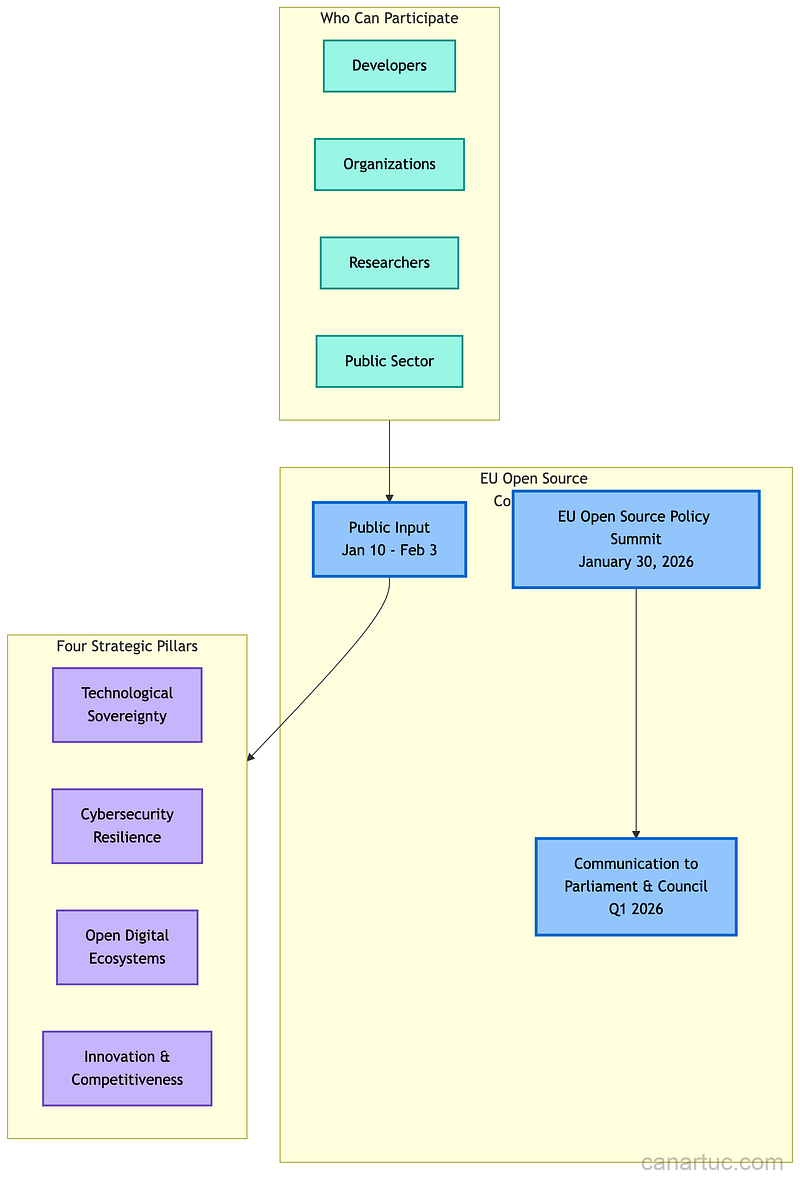
The consultation runs from January 6 to February 3, 2026. That is 28 days to shape European digital policy.
They want input on how open source contributes to:
Technological sovereignty and digital autonomy
Cybersecurity resilience
Open digital ecosystems
Innovation and economic competitiveness
I am a human writer who gets motivated to write more with your support! You don’t need to pay. I just need your clap 👏 if you like my story and comment ✍️ if you want to say something. You can follow me on Medium, LinkedIn, Instagram and X.
The EU Open Source Policy Summit on January 30, 2026 will discuss these contributions. The findings feed directly into a Q1 2026 Communication to the European Parliament and Council.
This is real policy making, not a talking shop.
Why This Matters More Than You Think
The Commission’s own data tells the story. Between 70% and 90% of EU digital infrastructure relies on open source software. That number should terrify anyone who thinks open source just happens on its own.
If this resonates with your experience building on open source, clap so other developers can find this.
I have architected 14 compliant platforms across GDPR, ISO 27001, and ISO 13485 requirements. Every single one depended on open source components. Linux kernels. PostgreSQL databases. Python libraries. Container runtimes.
The EU is not being generous by acknowledging open source. They are being realistic. The question is whether they will actually support it or just regulate it.
The Sovereignty Question
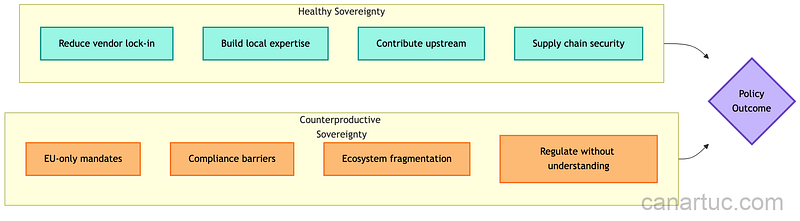
Here is where it gets complicated. “Technological sovereignty” sounds good, but it can mean very different things.
Good sovereignty: Reducing dependency on single vendors. Building local expertise. Contributing to international projects. Ensuring supply chain security.
Bad sovereignty: Mandating EU-only solutions. Creating compliance barriers that fragment the ecosystem. Regulating without understanding how open source actually works.
I have learned that good intentions do not guarantee good outcomes. The EU has a mixed track record on technology regulation.
GDPR was largely a success, but the Cyber Resilience Act still has open source communities worried. Will this strategy repeat CRA’s missteps or learn from them?
What You Should Tell Them
The consultation asks broad questions. Here is what I think matters most:
Fund maintainers, not just projects. The sustainability crisis in open source is a people problem. Key projects depend on unpaid or underpaid maintainers. The EU should fund individuals, not just foundations.
Contribute, do not just consume. European governments use open source constantly but rarely contribute back. Mandate that public sector IT projects contribute improvements upstream.
Understand the supply chain. Before regulating software supply chains, understand how they actually work. Talk to maintainers. Understand the difference between a weekend project and critical infrastructure.
Recognize community governance. Open source projects have their own governance models. Policy should work with these structures, not impose bureaucratic alternatives.
Have you participated in government consultations on open source before? Share your experience in the comments.
The January 30 Summit
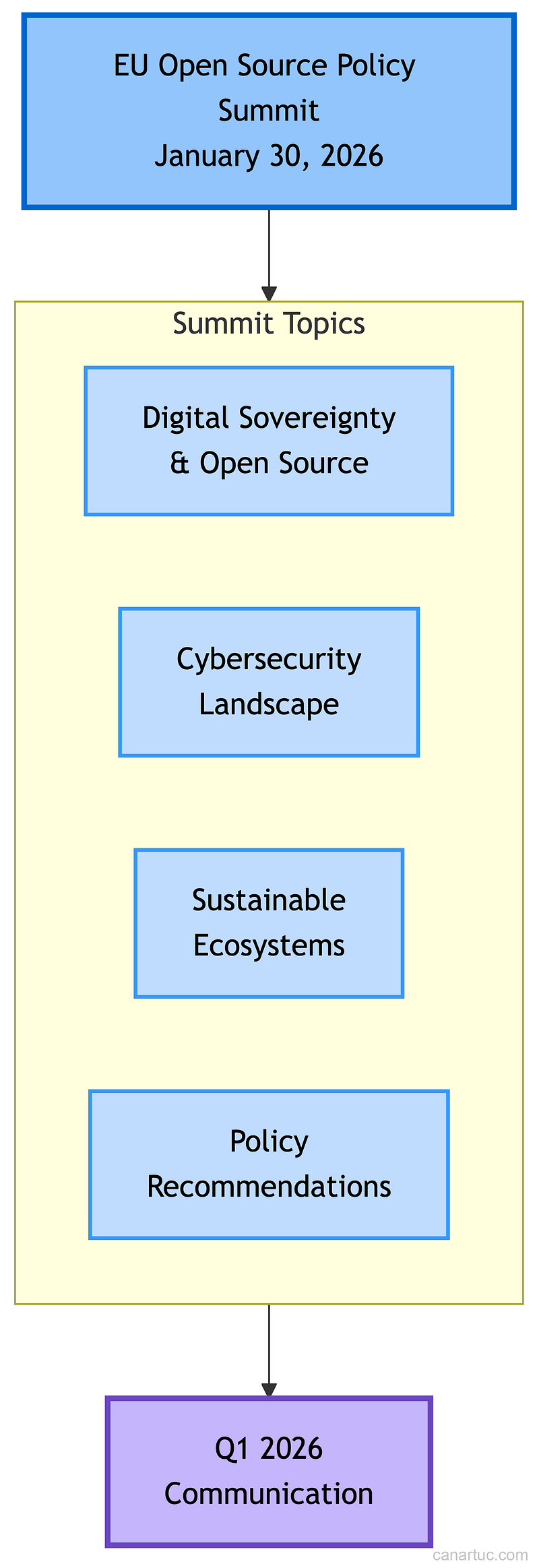
The EU Open Source Policy Summit happens January 30, 2026. This is where the rubber meets the road.
The summit will cover:
How open source supports EU digital sovereignty
Cybersecurity and open source
Building sustainable open source ecosystems
Policy recommendations for the Commission
If you cannot attend the summit, the consultation is your voice. February 3 is the deadline.
My Take on EU Open Source Policy
I have lived in Germany for years. I have seen the EU get technology policy right (GDPR) and wrong (cookie consent disasters). I have watched well-intentioned regulations create unintended consequences.
Open source is different from other technology sectors. It runs on contribution, not consumption. It works because communities have agency.
The EU needs to understand that open source is not a resource to be managed. It is an ecosystem to be nurtured.
This consultation is a genuine opportunity. The Commission is asking before acting. That is more than most governments do.
But opportunity means nothing without participation. Developers, maintainers, organizations: you have until February 3 to shape this policy.
This is your chance to change that.
Will you take it? Submit your response to the consultation. Tell them what open source means to you and what support it actually needs. The future of European open source policy depends on who shows up.
What would you tell the EU about open source? I want to hear your priorities in the comments.
I am a human writer who gets motivated to write more with your support! You don’t need to pay. I just need your clap 👏 if you like my story and comment ✍️ if you want to say something. You can follow me on Medium, LinkedIn, Instagram and X.