
Debian’s APT Rust Requirement: Take on the Governance Firestorm
Stop calling this a “Rust controversy.” I can tell you: this is a governance problem dressed up as a technical debate
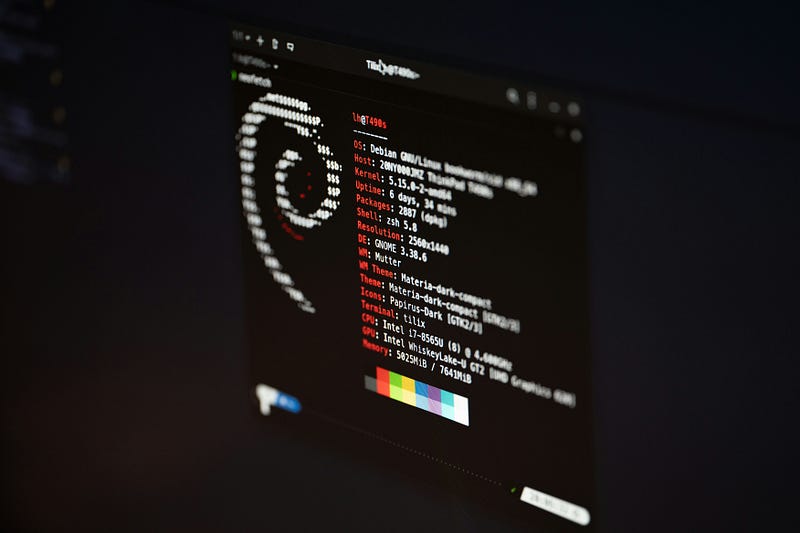
Julian Andres Klode, a Debian developer, dropped a bombshell announcement. Starting May 2026, APT (the package manager that basically runs Debian and its derivatives) will have a “hard requirement” on Rust. Not just any Rust dependency either. We’re talking the Rust compiler, standard library, and the entire Sequoia ecosystem for cryptographic operations.
The rationale? Memory safety for parsing .deb, .ar, and .tar files, plus HTTP signature verification. Sounds reasonable, right?
Here’s the thing. When someone says “we’re doing this for security,” my first question is always: who made that decision and through what process?
If this resonates with your experience watching open source projects struggle with governance, clap so other engineers can find this discussion.
The Technical Case: Valid But Incomplete
Let me be perfectly honest about something: memory safety matters. I’ve seen what buffer overflows and memory corruption can do to production systems.
Rust genuinely solves real problems. The language’s ownership model eliminates entire classes of vulnerabilities. For parsing untrusted input (which is exactly what APT does with package files), Rust’s safety guarantees are compelling.
The Sequoia project brings modern cryptography to the table. GPG, for all its historical importance, has a codebase that security researchers politely describe as “challenging.”
But here’s where my 20 years of experience kicks in: technical correctness doesn’t justify bypassing process.
I am a human writer who gets motivated to write more with your support! You don’t need to pay. I just need your clap 👏 if you like my story and comment ✍️ if you want to say something. You can follow me on Medium, LinkedIn, Instagram, and X.
Four Architectures Walk Into a Deprecation Notice
This decision affects real hardware. Not theoretical edge cases. Actual machines running actual workloads.
The architectures facing removal:
Alpha (DEC Alpha): Historical significance, still used in specialized computing
HPPA (HP PA-RISC): Enterprise systems that refuse to die
M68K (Motorola 680x0): Embedded systems, retrocomputing communities
SH4 (Hitachi SH4): Industrial applications, legacy embedded devices
I’ve unified 647 heterogeneous hardware variants with cloud infrastructure in my career. Trust me when I say: hardware diversity isn’t a bug. It’s a feature.
These architectures lack Rust compiler support. No Rust means no APT. No APT means no Debian. One maintainer’s technical preference could effectively orphan entire communities.
Have you dealt with legacy hardware that “nobody uses” but actually runs critical systems? I’d love to hear your war stories in the comments.
The Governance Elephant in the Room
Now, here’s where it gets interesting. The real controversy isn’t about Rust. It’s about how decisions get made in open source projects.
What bothers me about this situation:
Single-maintainer decision-making power is dangerous. I’ve seen what happens when one person’s vision overrides community input. Sometimes it works brilliantly. Often, it creates resentment and fragmentation.
Debian has formal governance structures. Technical committees exist for a reason. The Social Contract outlines principles. Yet here we are, with a unilateral announcement about core infrastructure changes.
The announcement came as a declaration, not a proposal. “APT will have a hard requirement on Rust” reads differently than “We’re proposing Rust requirements and seeking community input.”
A pattern I’ve seen too many times:
Technical decision made → Announcement published → Community outraged →
Maintainer defensive → Fork threatened → Compromise reached (or not)
This cycle exhausts everyone. It burns out maintainers who genuinely believe they’re doing the right thing. It frustrates contributors who feel unheard. It weakens the project.
The Memory Safety Trade-off Nobody Discusses
Let me share something from my experience building edge-to-cloud systems since 2008, before the tools matured.
Memory safety comes with costs. Real ones.
Build time increases: Rust compilation is slower than C. For a distribution that builds thousands of packages, this matters.
Dependency complexity: Adding Rust means bootstrapping Rust on every architecture. That’s a significant maintenance burden.
Contributor accessibility: The Debian maintainer pool skews toward C expertise. Requiring Rust shrinks that pool.
Toolchain fragility: More dependencies equal more failure points. APT is critical infrastructure. Every additional dependency is a potential breaking point.
None of this means Rust is wrong. It means the trade-offs deserve honest discussion.
I’ve been building systems long enough to know that “more secure” doesn’t automatically mean “better.” Security is one dimension. Maintainability, accessibility, and stability matter equally.
What Debian 14 (Forky) Actually Means
The timeline is aggressive. Debian 14 (codenamed “Forky”) will feature deeper Rust integration throughout the distribution.
Expected changes:
APT fully dependent on Rust ecosystem
More core utilities potentially gaining Rust dependencies
Bootstrap process requiring Rust compiler availability
Potential architecture support tied to Rust LLVM backend status
For organizations running Debian in production, this is planning-critical information. If you’re on unsupported hardware, 2026 is your deadline for migration strategy.
My Actual Take
Here’s my honest assessment. Rust in APT probably makes technical sense. The security benefits are real. Modern cryptography through Sequoia is overdue.
But the process is terrible.
I’ve learned this: how you make decisions matters as much as what you decide. Springing major infrastructure changes on a community, with a deadline attached, is governance malpractice.
The affected architecture communities deserved advance notice. They deserved input opportunities. They deserved time to explore alternatives (cross-compilation, GCC-based Rust backends, whatever).
What they got was a blog post with a deadline.
My recommendations for Debian:
Extend the timeline: May 2026 is aggressive. Give affected communities real time to respond.
Create a formal RFC process: Core infrastructure changes should go through documented proposal, review, and decision phases.
Explore alternatives for affected architectures: Cross-compilation, partial support, or officially blessed alternatives (like Ubuntu for those use cases).
Document the decision process: Future controversies become easier when precedent exists.
The Bigger Picture
This isn’t just about Debian. Every major open source project faces governance challenges. The tension between “move fast and fix things” and “build consensus before acting” is fundamental.
I’ve watched projects die from governance paralysis. Analysis paralysis is real. But I’ve also watched communities splinter when maintainers act unilaterally.
Debian’s strength has always been its community process. Slow, sometimes frustrating, but legitimate. Undermining that process for technical expediency sets a dangerous precedent.
The technologies that survive aren’t always the technically optimal ones. They’re the ones with communities that trust their governance.
Experience matters more than any article, including this one. If you’ve navigated similar governance challenges in open source projects, I want to learn from your experience.
What’s your take on the Rust requirement? Necessary security modernization or governance overreach? Share your perspective in the comments.
I am a human writer who gets motivated to write more with your support! You don’t need to pay. I just need your clap 👏 if you like my story and comment ✍️ if you want to say something. You can follow me on Medium, LinkedIn, Instagram, and X.