
Brave Rust Adblock Rewrite: 75% Memory Savings Explained
Brave Browser v1.85 slashes adblock memory by 75% through Rust and FlatBuffers. Technical deep dive into 45MB savings and faster filter…

Brave Browser v1.85 slashes adblock memory by 75% through Rust and FlatBuffers. Technical deep dive into 45MB savings and faster filter matching.
Seventy-five percent. Forty-five megabytes.
One browser team just proved that performance optimization is still an art form worth mastering.
Brave version 1.85 released a significant memory optimization that came into focus this week, making me stop scrolling and actually read the release notes. Their adblock engine now uses 75% less memory than before. Not through some clever JavaScript trick or lazy loading gimmick. Through fundamental engineering: Rust and FlatBuffers.
I have been watching browser development for over two decades. Most “performance improvements” amount to shaving milliseconds off startup time or reducing CPU spikes by single digits. What Brave accomplished here is genuinely impressive.
Let me walk you through what they did and why it matters.
The Problem With 100,000 Filters
Every modern adblocker maintains enormous filter lists. EasyList, EasyPrivacy, uBlock Origin filters. Brave ships with over 100,000 default rules that need to live in memory, ready to match against every network request your browser makes.
The traditional approach stores these filters as parsed objects in RAM. Each filter becomes a data structure with string fields, regex patterns, and metadata. Multiply that by 100,000, and you have a significant memory footprint before opening a single tab.
Brave’s previous implementation consumed around 60 megabytes just for filter storage. On a machine with 8GB RAM running a dozen extensions, that adds up.

FlatBuffers: The Serialization Secret
Google developed FlatBuffers for game engines where every millisecond and megabyte counts. The key insight: instead of parsing data into objects, you access it directly from the binary buffer.
Traditional serialization works like this: read bytes from disk, parse them into language-native objects, store those objects in heap memory. FlatBuffers skips the middle step. The binary format is designed so you can read fields directly from the buffer without creating intermediate objects.
Zero-copy deserialization. No parsing overhead. No duplicated data.
Brave migrated their entire filter storage to this format. The 100,000 rules now live in a compact binary blob that the Rust code reads directly. No JSON parsing. No object allocation for each filter.
The result: 45+ megabytes of RAM returned to your system.
Why Rust Made This Possible
You could theoretically implement FlatBuffers in any language. But Rust brings something critical to browser components: memory safety without garbage collection pauses.
Chrome learned this the hard way. Their security team reported that around 70% of high-severity vulnerabilities stem from memory safety issues. C++ code handling untrusted input is inherently dangerous.
Rust eliminates entire categories of bugs at compile time. Buffer overflows, use-after-free, data races. The compiler catches them before the code ships.
For an adblock engine processing every URL and network request, this matters enormously. You want speed without sacrificing security.
Brave’s implementation also achieved 19% reduction in memory allocations by using stack-allocated vectors where possible. Heap allocation is expensive. Every malloc call has overhead. Rust makes it natural to prefer stack allocation through its ownership system.

The Numbers That Matter
Let me put concrete figures on what Brave achieved:
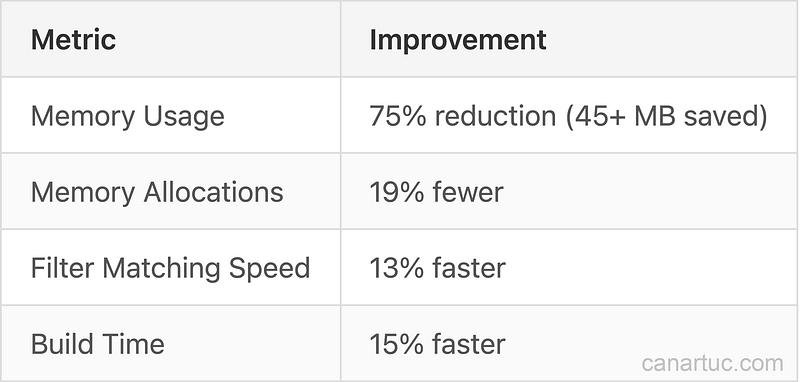
That 13% faster filter matching compounds across thousands of requests per browsing session. Pages feel snappier because the adblocker is not the bottleneck.
The 15% faster build time benefits Brave’s development team directly. Faster iteration cycles mean more frequent improvements.
What This Means For Browser Choice
I switched my daily driver to Brave about three years ago. Privacy-focused defaults, Chromium compatibility, and a team that actually cares about performance convinced me. Also, I am not convinced Mozilla’s management style.
This release reinforces why I made that choice.
Mozilla keeps restructuring. Chrome keeps adding features that benefit Google’s advertising business. Brave keeps shipping engineering wins that benefit users.
Is Brave perfect? No browser is. Their crypto wallet integration annoys me. The BAT token system feels unnecessary. But when the core engineering team prioritizes memory efficiency and security through Rust, I can tolerate some bloat in optional features.
The browser landscape needs competition. Chrome dominates with over 65% market share. Safari follows on Apple devices. Firefox struggles to maintain relevance. Brave carves out a niche by doing the hard engineering work that bigger teams avoid.
Looking Forward
Brave plans to extend their Rust rewrite beyond adblocking. More components will migrate from C++ to Rust. Each migration brings the same benefits: memory safety, potential performance gains, and reduced attack surface.
The browser engine itself remains Chromium. But the privacy and security layers increasingly become Brave-specific Rust code.
For those of us who remember when Firefox was the scrappy underdog fighting Internet Explorer, Brave fills a similar role today. Technical excellence as competitive advantage. Actual innovation instead of feature checkbox marketing.
Seventy-five percent memory reduction. That is what happens when engineers optimize for users instead of engagement metrics.
If you found this breakdown useful, consider giving it a clap. I write about Linux, open source, and the technical decisions that shape our digital infrastructure.