
Android vs iOS: What’s Really Running Your Phone
Android uses a modified Linux. iOS uses Unix. Both claim “open source” roots. Here’s what regular phone users should actually understand…
Android uses a modified Linux. iOS uses Unix. Both claim “open source” roots. Here’s what regular phone users should actually understand about their devices.
Four billion phones. Two systems. Most people never think about what’s actually running underneath their apps.
You tap the screen. An app opens. Maybe you scroll through Instagram or check your email. But between your finger and that app, there’s an entire operating system making decisions thousands of times per second.
If you’ve ever wondered why your phone behaves the way it does, keep reading.
When I switched from iPhone to Android (and back again), I started noticing things most users never question: why does my friend’s Samsung feel different from my Pixel, even though both run Android? Why do iPhones seem to work the same whether you bought one two years ago or last month?
The answers are buried in something called the kernel (the core software that talks directly to your phone’s hardware). And the story is more interesting than you might think.
Android Runs on Linux (Sort Of)
You’ve probably heard of Linux. It’s the system (more precisely, an operating system) that runs most of the internet’s servers, smart TVs, and even some refrigerators.
Android uses Linux as its foundation. But here’s the catch: Google doesn’t just take Linux and ship it. They modify it significantly.
Think of it like a house. Linux is the original blueprint. But Google adds rooms, removes walls, and changes the plumbing. By the time it reaches your phone, thousands of changes have been made to that original blueprint.
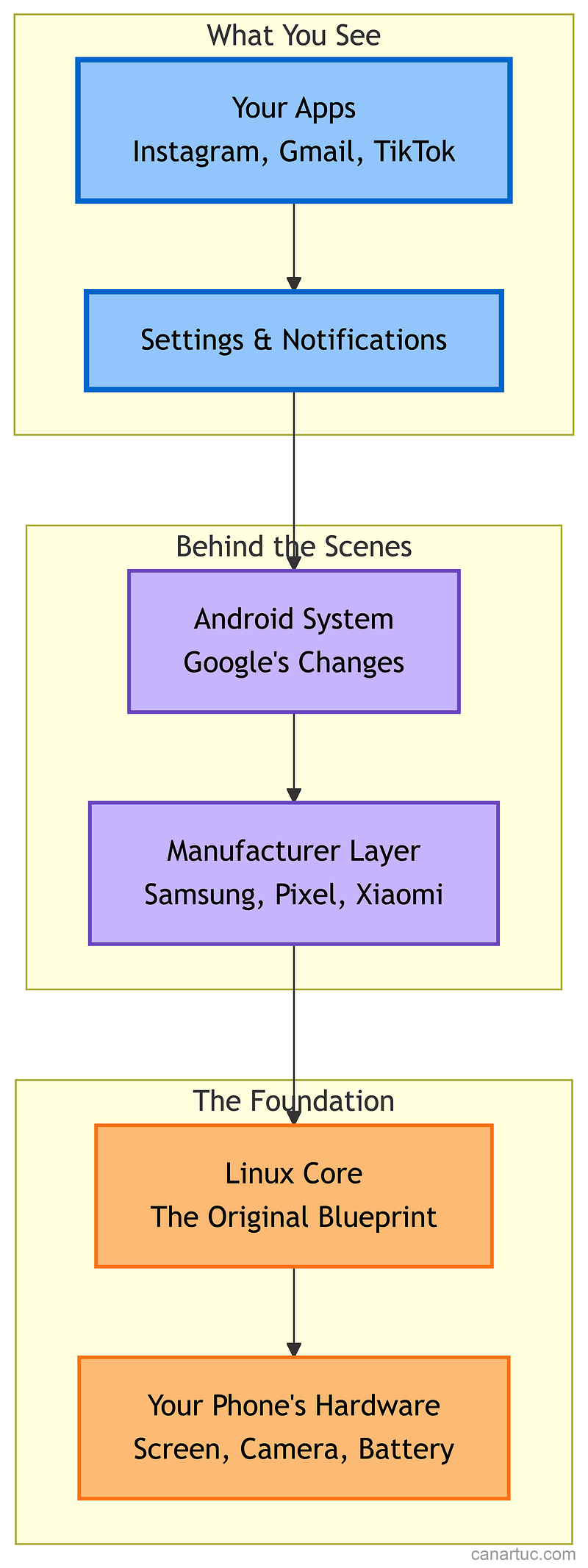
The problem? Each phone manufacturer adds their own modifications. So the path from Linux to your specific phone looks like this:
Original Linux
Google’s version
Chip maker’s version (Qualcomm or MediaTek)
Phone manufacturer’s version (Samsung, Xiaomi, etc.)
Your phone
Each layer adds changes. This is why your Samsung phone acts differently from your friend’s Pixel, even though both are “Android.”
If you’ve noticed this difference, clap so others can find this explanation.
I am a human writer who gets motivated to write more with your support! You don’t need to pay. I just need your clap 👏 if you like my story and comment ✍️ if you want to say something. You can follow me on Medium, LinkedIn, and X.
iPhone Runs on Unix (But a Different Kind)
iPhones don’t use Linux at all. They use something called Darwin, which is based on Unix (an older system that Linux was inspired by).
Here’s what might surprise you: the core of macOS (what runs your MacBook) is actually certified as “real Unix” by an official standards organization. That same foundation powers your iPhone.
The key difference? Apple controls everything.
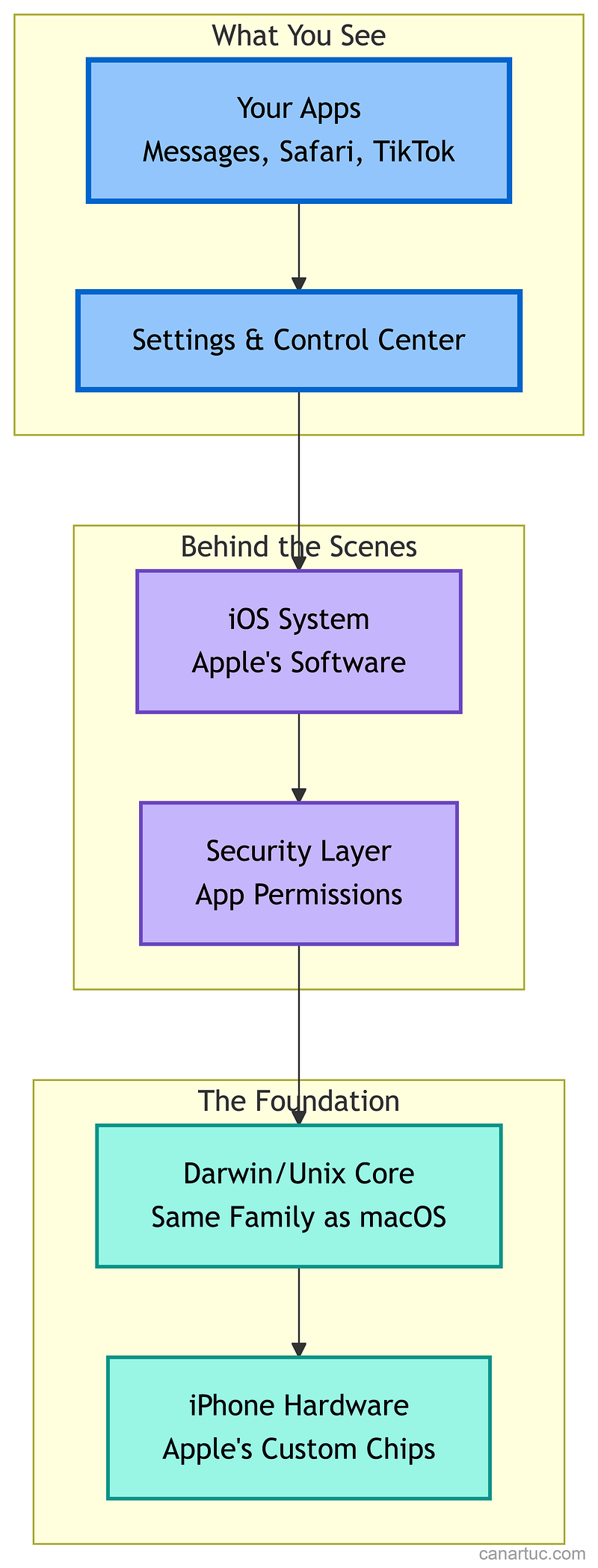
There’s no Samsung version. No Qualcomm version. Just Apple’s version running on Apple’s hardware. This is why all iPhones feel remarkably similar, whether you bought the newest model or one from three years ago.
Is Android Really “Open Source”?
You’ve probably heard that Android is “open source,” meaning anyone can see and use the code. That’s technically true. But the reality is more complicated.
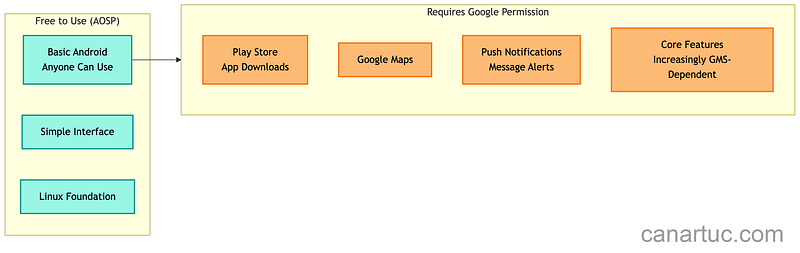
Android has two parts:
The free part (AOSP): The basic Android system is genuinely open. Amazon used it to build Fire tablets without asking Google’s permission. Chinese phone makers use it for phones sold without Google services.
The Google part (GMS): The Google apps, the Play Store, Google Maps, push notifications, and increasingly, core phone features. This part is not open. You need Google’s permission to include it.
Here’s what this means for you:
If you buy a phone with Google apps, you’re getting both parts bundled together. But Google has been moving more and more functionality from the “free part” to the “Google part.” In March 2025, Google moved all Android development behind closed doors — the source code still gets released, but only after each version is finished.
This is why “removing Google” from an Android phone is harder than you might think. The free version of Android is increasingly just a skeleton.
Why Your Android Phone Stops Getting Updates
This might be the most practical thing you’ll learn today.
Remember those layers between Linux and your phone? Each layer has to update their code when a new version comes out. Google updates Android, then chip makers have to update their code, then phone manufacturers have to update theirs.
If any layer in that chain stops updating, your phone stops getting updates.
This is why Samsung phones stop getting updates after a few years, while iPhones from 2018 can still run the latest iOS. Apple controls every layer. No waiting for chip makers. No waiting for manufacturers.
For you as a user, this means:
iPhone: Updates directly from Apple for 5–7 years
Android: Updates depend on your manufacturer’s commitment (2–4 years for most phones, though Samsung and Google flagships from 2024 onward now promise 7 years)
The Unexpected Twist: Darwin Is Open Source Too
Here’s something that surprises most people: iOS (the “closed” system) is built on Darwin, which is genuinely open source. You can download the code that powers every iPhone.
Meanwhile, Android (the “open” system) has Google progressively moving more code behind closed doors.
That’s the part I’ve never understood, as open source enthusiasts always suggest using Android while iOS is “closed source”.
It is an interesting irony. The supposedly closed ecosystem rests on truly open foundations. The supposedly open ecosystem is becoming more closed every year.
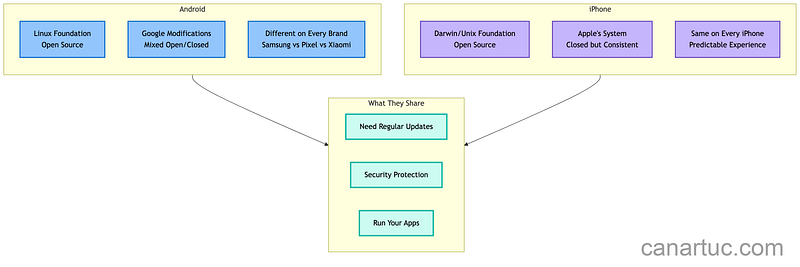
What This Means for You
Understanding these foundations helps explain things you’ve probably noticed:
Why different Android phones feel different: Samsung, Pixel, and Xiaomi all add their own layers on top of Android. Each creates a different experience.
Why iPhones feel consistent: Apple controls everything from hardware to software. No layers in between means no variation.
Why Android offers more choice: Those same layers that create fragmentation also let manufacturers experiment. Want a folding phone? A phone with five cameras? That experimentation happens because manufacturers can modify Android.
Why removing Google is hard: The “open” Android increasingly depends on “closed” Google services. The free version is less and less useful on its own.
Why iPhone updates last longer: No waiting for chip makers or manufacturers. Apple can push updates directly to phones they made seven years ago.
The Bottom Line
Neither Android nor iOS is as open or as closed as their marketing suggests.
Android gives you choice at the cost of consistency. Different manufacturers create different experiences, updates depend on multiple companies cooperating, and the “open” core increasingly relies on closed Google services.
iOS gives you consistency at the cost of choice. Every iPhone works the same way, updates come directly and quickly, but you get exactly what Apple decides to give you.
I’ve learned that foundations matter more than features. The invisible software between your fingers and your apps shapes everything about how your phone behaves.
Next time you tap your phone, you’ll know there’s a whole world running underneath. And now you understand why your friend’s phone feels different from yours, even when you’re using the same app.
What surprises you most about how your phone actually works? I’d love to hear your questions in the comments.
I am a human writer who gets motivated to write more with your support! You don’t need to pay. I just need your clap 👏 if you like my story and comment ✍️ if you want to say something. You can follow me on Medium, LinkedIn, and X.